Duck Breast with Pomegranate Glaze
Highlighted under: International Collection
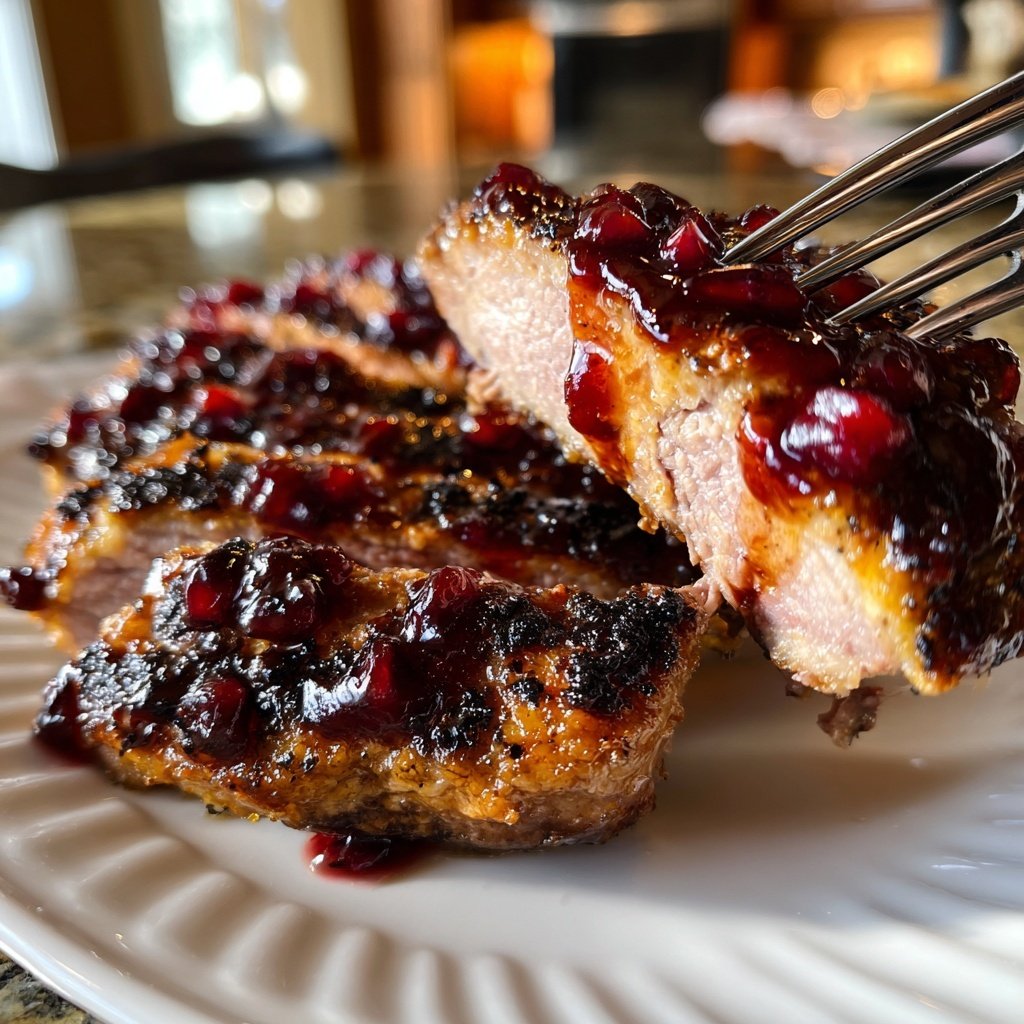
I love indulging in rich flavors, and this Duck Breast with Pomegranate Glaze is no exception. The combination of succulent duck and a tangy pomegranate glaze creates a harmonious balance that dances on the palate. Preparing this dish might seem daunting, but with a few simple steps, I guarantee you’ll impress your guests. The hint of sweetness from the glaze complements the savory notes of the duck perfectly, making it a delightful addition to any special occasion or dinner party. Let’s dive into this culinary adventure!
When I first tried making Duck Breast with Pomegranate Glaze, I was amazed at how well the flavors melded together. The rich, savory notes of the duck paired beautifully with the sweet and tart essence of the pomegranate, creating a dish that's truly special. I learned to score the skin before cooking to ensure maximum crispy texture, which has now become a staple in my cooking repertoire.
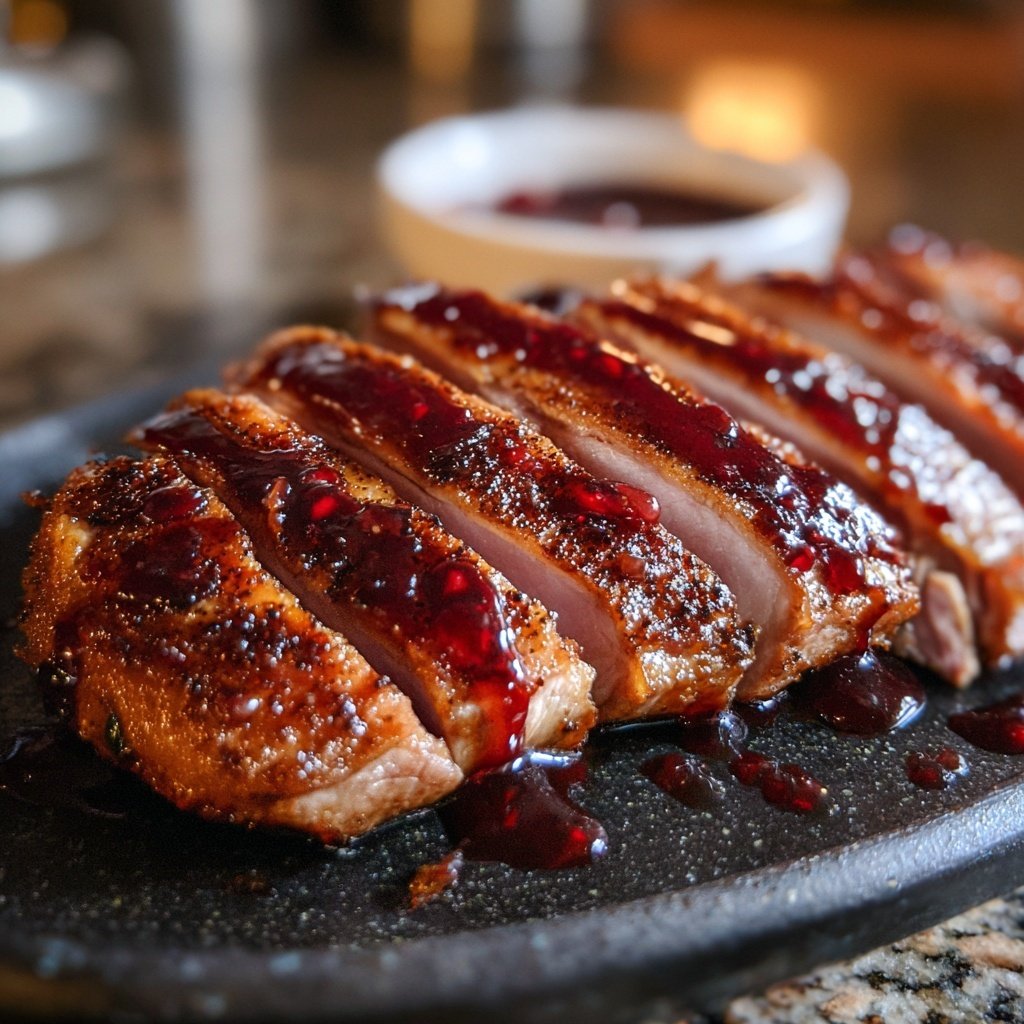
One memorable dinner party showcased this dish as the star attraction. My friends were blown away by its elegance and flavor. I always recommend serving it on a platter for a stunning presentation—and don’t forget to add a sprinkle of fresh pomegranate seeds on top for that extra pop of color and flavor!
Why You'll Love This Recipe
- Succulent duck breast with perfectly crispy skin
- Sweet and tangy pomegranate glaze that elevates the dish
- Impressive and elegant for special occasions
Perfecting the Duck Breast
Cooking duck breast to perfection requires a careful balance of heat and timing. Starting with a cold skillet helps render the fat slowly, allowing the skin to become perfectly crispy without burning. I find that a medium heat is ideal—too high and the skin may scorch before the fat has fully rendered. Aim for a golden, crispy skin that takes about 6-8 minutes, then a flip for another 4-6 minutes for a medium-rare finish, reaching an internal temperature of 135°F.
Resting the duck after cooking is crucial, as it allows the juices to redistribute, ensuring a tender and flavorful bite. I usually let the duck breast rest for about 5 minutes under a loosely tented foil. This step is easy to overlook, but skipping it can result in dry meat. When you slice into the breast, the juices should flow, giving you a succulent, mouthwatering experience.
Crafting the Pomegranate Glaze
The pomegranate glaze elevates this dish with its bright, tangy profile, contrasting beautifully with the rich duck. When selecting pomegranate juice, opt for a pure, unsweetened version to maintain the glaze's natural tartness. If you're feeling adventurous, you can experiment with other fruit juices like cherry or cranberry for a different flavor twist. Just be cautious with the sweetness level, adjusting the honey component as necessary to maintain balance.
Thickening the glaze is a simple process, but it requires attention. Once you add the cornstarch mixture, stir consistently until it reaches a glossy, thick consistency in about 2-3 minutes. If it becomes too thick, a splash of water or additional pomegranate juice can help adjust the texture. This glaze can also be made ahead of time and stored in the refrigerator for up to a week; just reheat gently before serving.
Serving Suggestions and Variations
Serving duck breast with pomegranate glaze can be a feast for the eyes and palate alike. I recommend plating the duck slices on a bed of fragrant couscous or wild rice for a nourishing base. Adding roasted seasonal vegetables not only enhances flavor but also adds vibrant color to the dish. A sprinkle of fresh herbs like mint or parsley can provide an aromatic twist that complements the overall presentation beautifully.
For a delightful twist, consider adding a splash of orange juice or zest to the glaze for a citrusy note that pairs well with the pomegranate. You can also experiment with adding spices like star anise or cinnamon to the glaze, which can give it a warm, aromatic depth. Don't hesitate to mix it up; cooking should allow for creativity and fun!
Ingredients
Gather these ingredients to create a tantalizing Duck Breast with Pomegranate Glaze.
For the Duck
- 2 duck breasts, skin on
- Salt, to taste
- Black pepper, to taste
For the Pomegranate Glaze
- 1 cup pomegranate juice
- 2 tablespoons honey
- 1 tablespoon balsamic vinegar
- 1 teaspoon cornstarch, mixed with 1 tablespoon water
- Fresh pomegranate seeds, for garnish
Now that you have all your ingredients, you're ready to prepare a delicious meal!
Instructions
Follow these steps for a perfectly cooked duck and an irresistible glaze!
Prepare the Duck Breasts
Score the duck breasts by making shallow cuts in a crisscross pattern on the skin side, taking care not to cut into the meat. Season both sides with salt and pepper.
Cook the Duck
Place the duck breasts skin-side down in a cold skillet. Turn the heat to medium. Cook for about 6-8 minutes, allowing the fat to render and the skin to get crispy. Once golden, flip and cook for an additional 4-6 minutes for medium-rare.
Make the Pomegranate Glaze
In a saucepan, combine pomegranate juice, honey, and balsamic vinegar. Bring to a simmer over medium heat. Stir in the cornstarch mixture and cook until the glaze thickens, about 2-3 minutes.
Serve
Slice the duck breasts and drizzle the pomegranate glaze over them. Garnish with fresh pomegranate seeds for added flavor and presentation.
Your Duck Breast with Pomegranate Glaze is now ready to be enjoyed!
Pro Tips
- Let the duck rest for a few minutes before slicing to retain its juices.
Ingredient Insights
Duck breast is a unique protein with a rich flavor profile that stands out in gourmet cooking. The skin-on preparation is essential for achieving that crispy texture and savory richness that complements the sweet pomegranate glaze. When selecting your duck breasts, look for fresh, high-quality cuts, preferably from free-range sources if possible, as they tend to have richer flavor and less gaminess. Additionally, let the duck breasts come to room temperature for about 30 minutes before cooking to ensure even cooking.
Pomegranate juice is the star component of the glaze and has both culinary and nutritional benefits. Rich in antioxidants and vitamin C, it not only enhances the dish's flavor but also boosts its health aspects. Should you wish to substitute the pomegranate juice, consider using a homemade reduction from fresh pomegranates. Just cook down the seeds with a bit of water and strain for a fresh, vibrant juice.
Storing and Reheating Tips
If you have leftovers, store the duck breast separately from the glaze to maintain texture and flavor integrity. Wrap the duck breast tightly in plastic wrap or foil and place it in an airtight container; it can be refrigerated for up to 3 days. For longer storage, consider freezing the cooked duck, which can last up to 2 months. However, it's best enjoyed fresh for optimal taste and tenderness.
When reheating, always do it gently to avoid drying out the duck. I recommend using an oven set to 275°F, covering the duck breast with foil to retain moisture. Heat for about 15-20 minutes, checking frequently until warmed through. Reheat the glaze on the stovetop over low heat, stirring until just warmed, then drizzle over the reheated duck before serving.
Questions About Recipes
→ Can I use frozen duck breasts?
Yes, just make sure to fully thaw them in the refrigerator before cooking.
→ What can I serve with this dish?
This dish pairs beautifully with roasted vegetables or a simple arugula salad.
→ How do I know when the duck is cooked properly?
A meat thermometer should read 135°F for medium-rare.
→ Can I make the glaze ahead of time?
Yes, the glaze can be made in advance and stored in the refrigerator for up to a week.
Duck Breast with Pomegranate Glaze
Created by: Hester Lockwood
Recipe Type: International Collection
Skill Level: Intermediate
Final Quantity: 4 servings
What You'll Need
For the Duck
- 2 duck breasts, skin on
- Salt, to taste
- Black pepper, to taste
For the Pomegranate Glaze
- 1 cup pomegranate juice
- 2 tablespoons honey
- 1 tablespoon balsamic vinegar
- 1 teaspoon cornstarch, mixed with 1 tablespoon water
- Fresh pomegranate seeds, for garnish
How-To Steps
Score the duck breasts by making shallow cuts in a crisscross pattern on the skin side, taking care not to cut into the meat. Season both sides with salt and pepper.
Place the duck breasts skin-side down in a cold skillet. Turn the heat to medium. Cook for about 6-8 minutes, allowing the fat to render and the skin to get crispy. Once golden, flip and cook for an additional 4-6 minutes for medium-rare.
In a saucepan, combine pomegranate juice, honey, and balsamic vinegar. Bring to a simmer over medium heat. Stir in the cornstarch mixture and cook until the glaze thickens, about 2-3 minutes.
Slice the duck breasts and drizzle the pomegranate glaze over them. Garnish with fresh pomegranate seeds for added flavor and presentation.
Extra Tips
- Let the duck rest for a few minutes before slicing to retain its juices.
Nutritional Breakdown (Per Serving)
- Calories: 380 kcal
- Total Fat: 26g
- Saturated Fat: 15g
- Cholesterol: 195mg
- Sodium: 85mg
- Total Carbohydrates: 32g
- Dietary Fiber: 3g
- Sugars: 24g
- Protein: 6g